
E-commerce
The Product Design Overhaul that Doubled Conversion Rates on Affiliate Deals
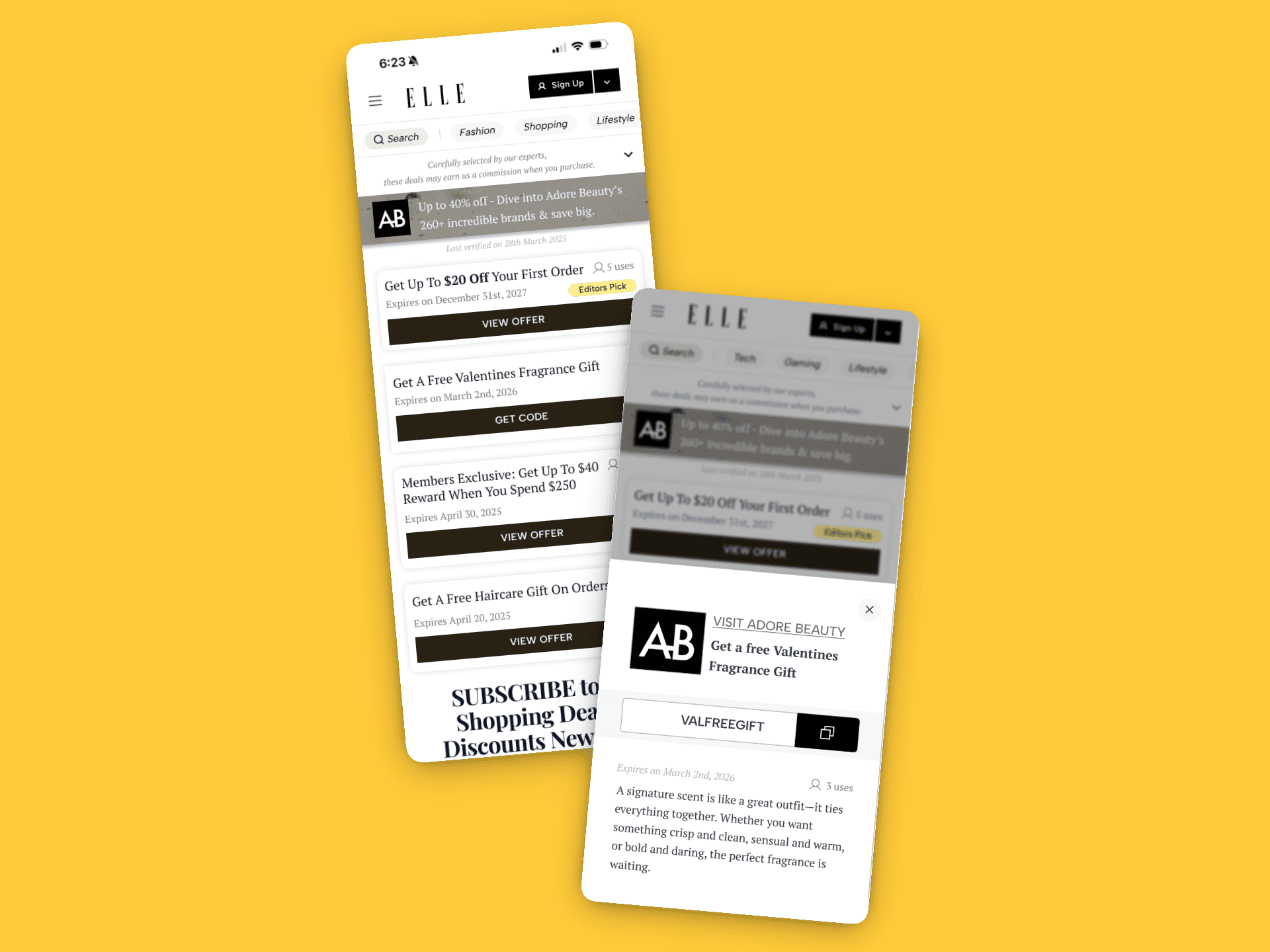
Powering the future of media-led commerce, the Are Deals software allows readers to transition from discovery to purchase within a single, unified digital experience.
Company
Are Media
Team
Product Designer (me)
Business Analyst
1 Content Director
2 Front-End Developers
1 Back-End Developer
My Role
As Lead Product Designer, I spearheaded the strategic recovery from Google’s 2024 Site Reputation Abuse update by auditing de-indexed directories and engineering a trust-centric interface that validated first-party editorial oversight.
Challenge
Are Media’s flagship brands faced a critical revenue crisis when their affiliate commerce sections managed by third-party provider Upfeat triggered a Google Site Reputation Abuse penalty. This "black box" dependency created a fragmented user experience, eroded brand trust through hidden redirects, and caused the overnight de-indexing of our highest-earning pages.
Results
We replaced an external coupon engine with a proprietary, trust-centric WordPress plugin, restoring 100% of search authority and empowering Are Media to scale the system across 12 global brands.
Research
I combined competitive analysis, data auditing, and stakeholder interviews to bridge the gap between search compliance and user trust. By diagnosing the structural flaws of the third-party model, I established the blueprint for a proprietary system that prioritizes editorial integrity and technical performance.
Competitor Anlaysis
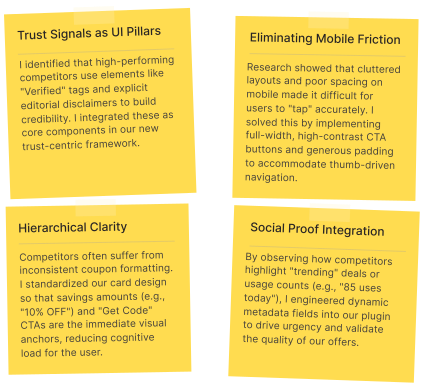
To define the UX requirements for our proprietary WordPress plugin, I conducted a mobile-first competitor audit of industry leaders like Lifehacker and Cuponation. This analysis revealed a significant opportunity to move away from "cluttered" third-party layouts toward a clean, editorial-first interface.
Data-Driven Journey Mapping
Collaborating with our Business Analyst, I mapped the "leaky" legacy funnel, uncovering a massive user drop-off triggered by jarring redirects to the Upfeat third-party domain
Technical Constraint Mapping
I worked alongside Backend Developers to ensure our custom WordPress plugin could ingest complex, multi-retailer API feeds without bloated code or latency, protecting our Core Web Vitals, a critical factor in regaining Google’s favor.
The Design Strategy
I designed Are Deals not just as a plugin, but as a trust-framework. The solution centered on three pillars: Editorial Transparency, Modular Flexibility, and Conversion-Centric UI.
The primary objective was to align the UI with Google’s E-E-A-T (Experience, Expertise, Authoritativeness, and Trustworthiness) guidelines to recover lost search visibility while streamlining the conversion path.
The Plugin Architecture
By building the entire feature set as a library of new components and template layouts within our existing design system, I ensured a seamless, "plug-and-play" deployment. This modular architecture allowed us to roll out the feature across every Are Media brand (from the high-fashion aesthetic of Marie Claire to the home-focused BHG) with near-zero turnaround time, maintaining perfect brand consistency while instantly upgrading our commerce capabilities.
Optimized Conversion
Funnels
First, I redesigned the "Copy Code" micro-interaction into a seamless, one-click experience that triggers the retailer site in a new tab while maintaining active engagement on the host site.
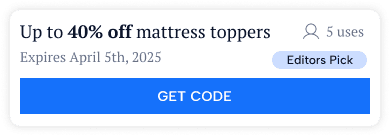
Second, I prioritized mobile-first layouts to serve our 70% mobile traffic base, implementing full-width CTA buttons and streamlined coupon hierarchies to maximize conversion rates for thumb-tapped interactions.
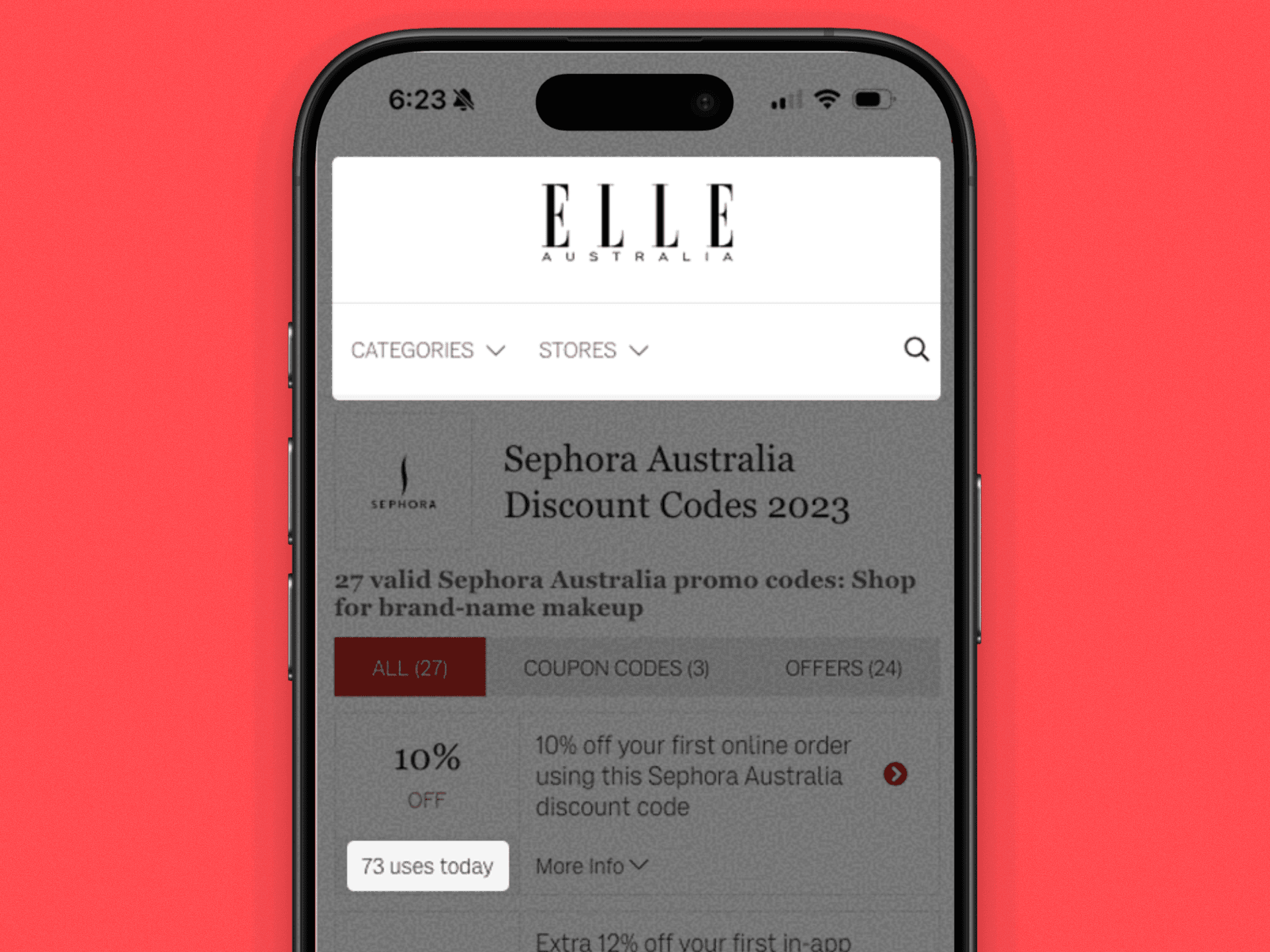
Before
Fragmented Identity & Low-Trust UI
Inconsistent Branding: The legacy site header was disconnected from the core brand identity, creating a disjointed user experience that felt like a "third-party" site.
Low-Authority Signals: A lack of transparency and verification metadata made the content vulnerable to "low-value" SEO flags, offering no proof of deal validity.
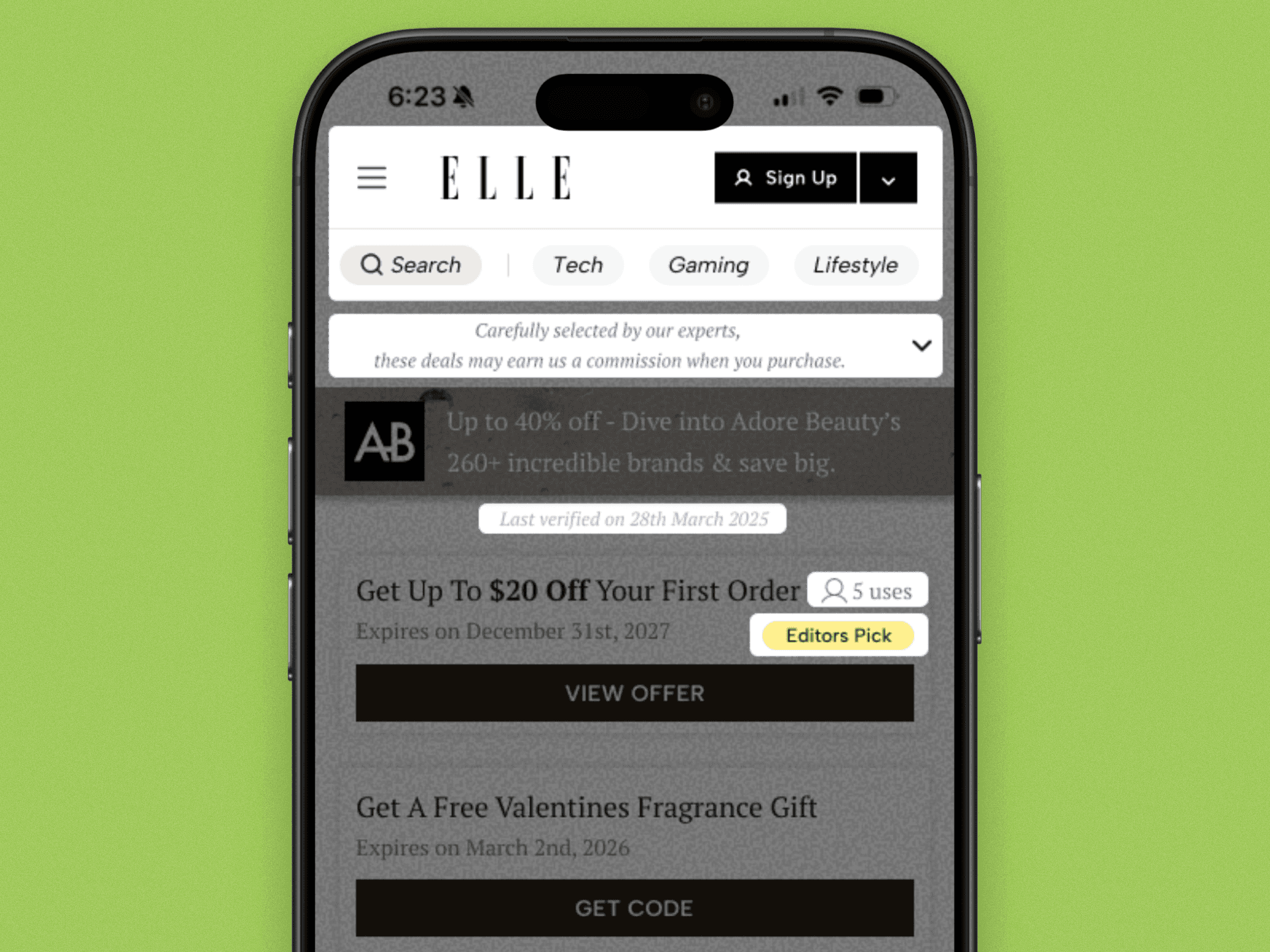
After
Authority-Driven Architecture (E-E-A-T focus)
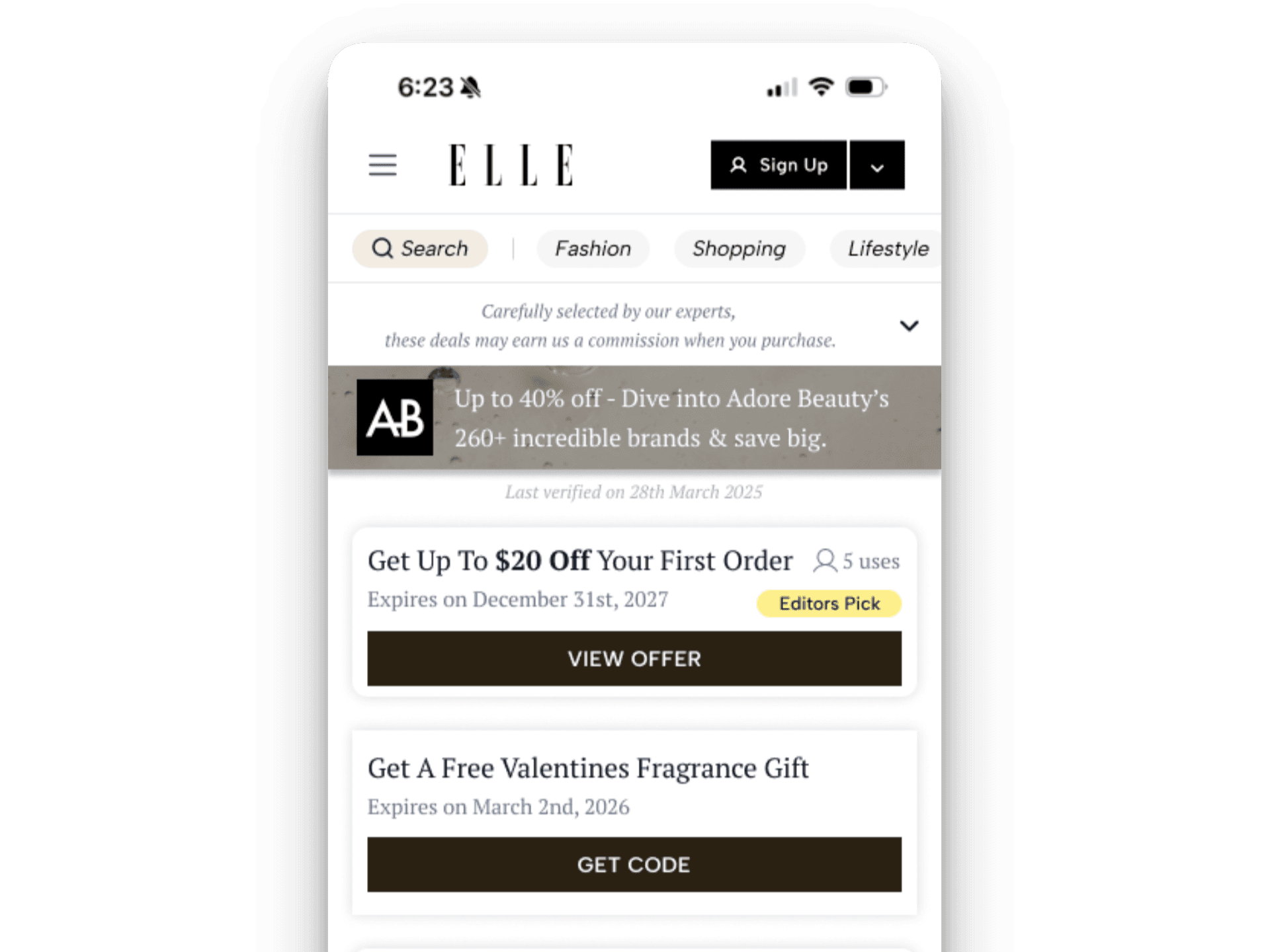
Seamless Brand Integration: Aligned the new design with the existing site header’s look and feel to maintain brand equity and user trust across the network.
E-E-A-T Verification: Integrated "Editors Pick" pills and "Last Verified" timestamps to combat SEO "low-value content" flags and establish editorial authority.
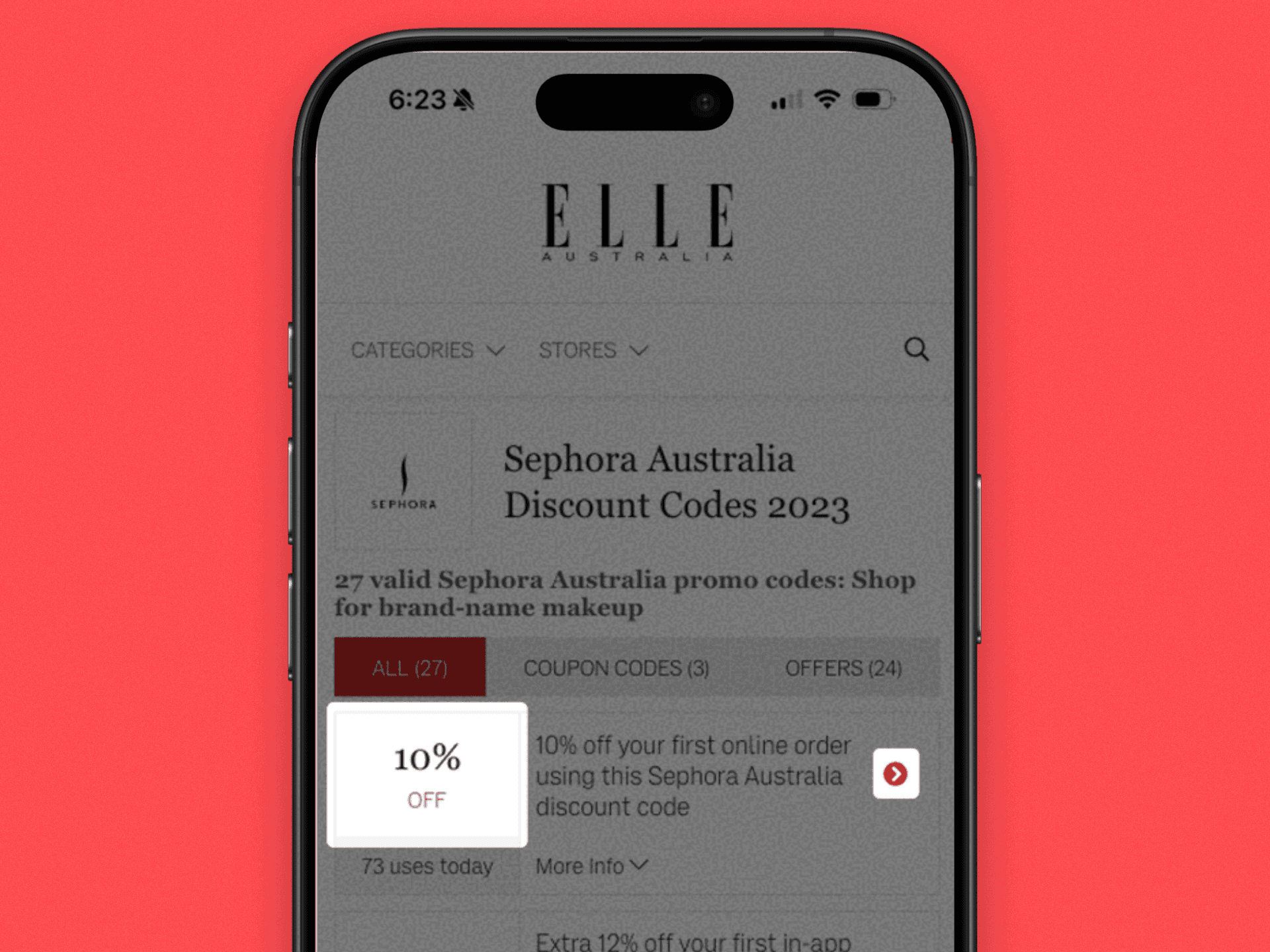
Before
Fragmented Hierarchy & Wasted Space
Passive Layout: The static "10% OFF" box occupied prime real estate without being interactive, creating a dead zone in the UI.
Unclear Intent: The primary action was buried in a small, secondary icon on the right, forcing users to "hunt" for the deal.
Information Overload: Secondary details competed with the main offer, diluting the conversion goal.
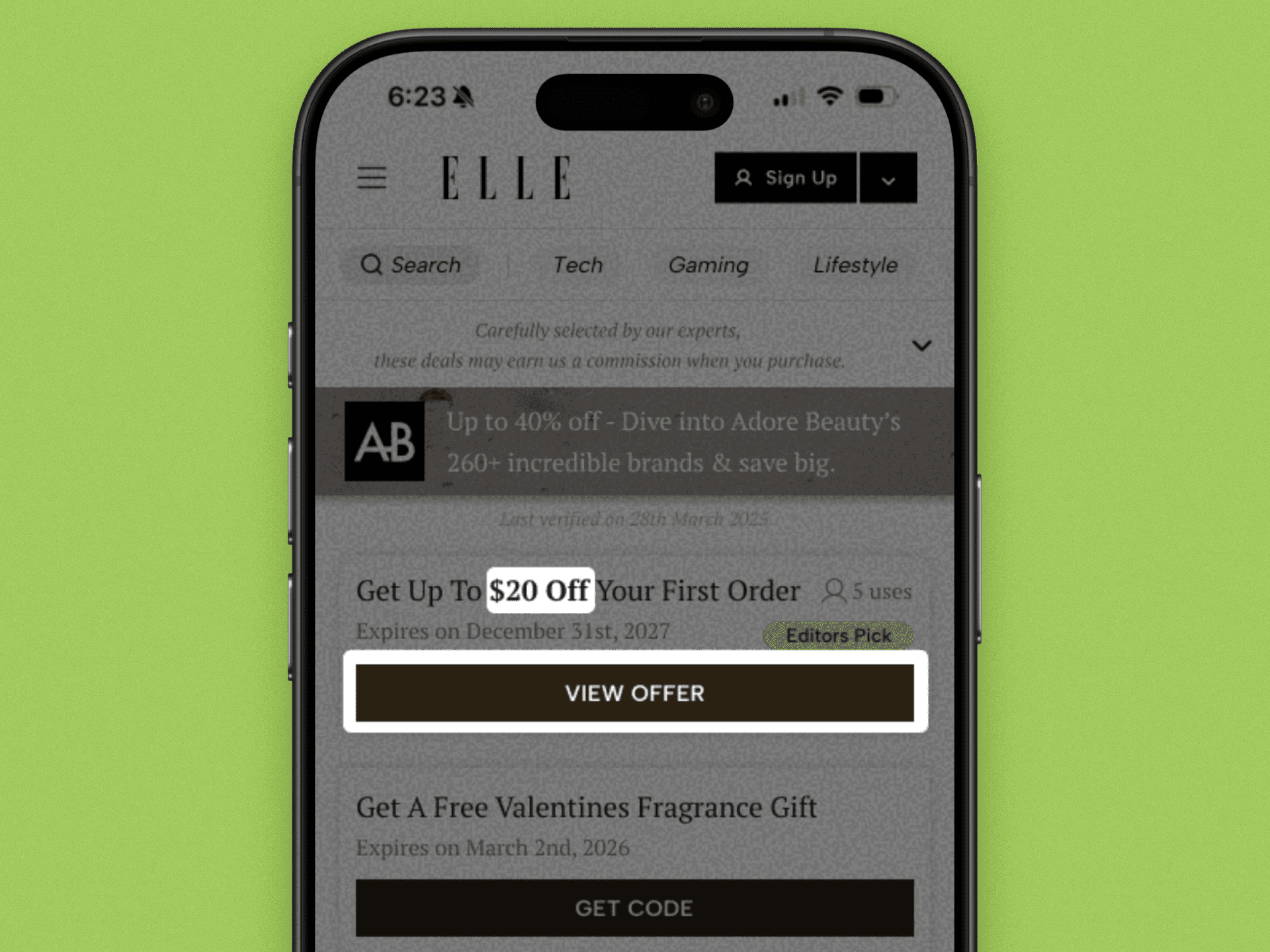
After
Action-Oriented & Conversion-Focused
Direct CTA: Replaced the static box with a high-contrast, full-width button to make the "Get Code/View Offer" action unmistakable.
Optimised Real Estate: Reclaimed wasted space to prioritise the value proposition and urgency signals.
Streamlined UX: Established a clear visual path from the brand logo to the final click, designed to maximize affiliate click-through rates at scale.